AI agents that do real work, in production
MadeLabs designs and builds AI agents that do real work inside your business. They're connected to your systems and data, and engineers review them to production standard.
- Human checkpoints by design
- Evaluated before launch
- Cost controls from the start
More work done, without more people carrying it
Every business has work that follows a pattern but still takes a person: reading what comes in, pulling out what matters, checking it against the records, and moving it on. It's slow and error-prone, and it grows with the business. Hiring doesn't fix it.
A well-built agent takes that work on and runs reliably against your own data and systems. You set the limits, and a person approves where it matters. The work moves faster and costs less, and your team spends its time on what needs their judgment.
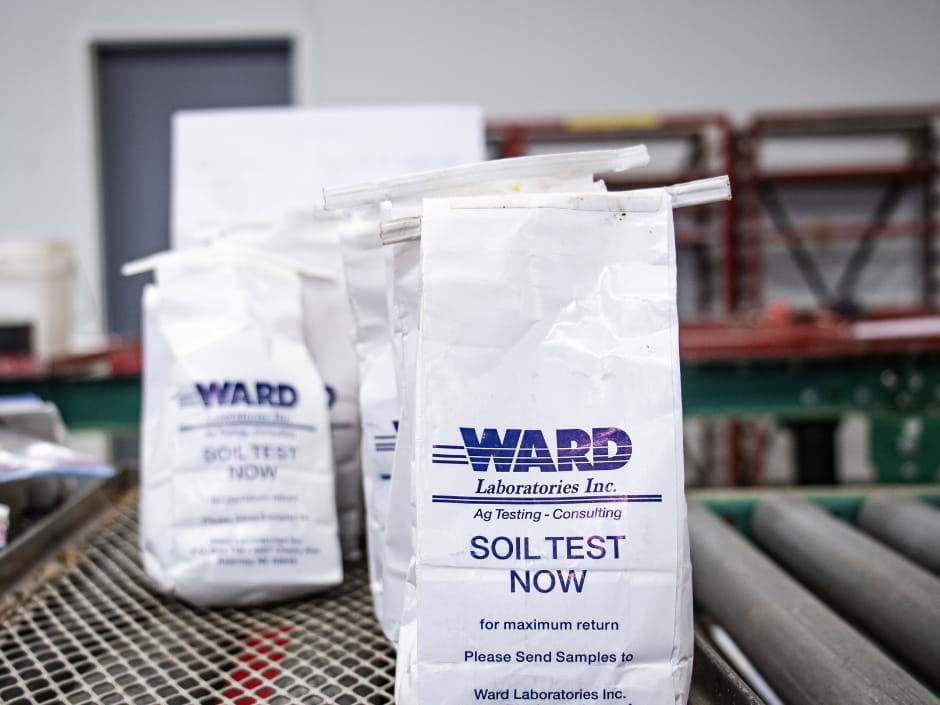
Example: sample intake, Ward Laboratories
What can an AI agent actually do for us?
An agent can take on work that follows a pattern but still needs judgment: reading documents and images, extracting and checking data, drafting, and acting in your systems within limits you set. We start from a business measure, and we'll tell you plainly when an agent is the wrong tool.
At Ward Laboratories, a mobile app photographs the submittal sheet and the sample bag. AI extracts the customer information and test requests, and the platform checks them against existing records. A person reviews the result before it's submitted, which cuts manual data entry and catches errors before a sample enters the lab.
Featured: FNI, loan origination
One form, every applicant's language
A loan origination platform needed its dynamic forms in the applicant's own language. AI translates the content as it's generated, leaves industry-specific terms untranslated, and caches what's already been translated. There's no copy of every form stored in every language.
- One source. FNI keeps a single version of every dynamic loan application form.
- Cache first. Content that has been translated before is served from the cache, so it is never paid for twice.
- Translate the rest. New content goes to Google Cloud AI translation, based on the applicant's language.
- Protected terms stay untranslated. Industry-specific terms pass through exactly as written.
- Every applicant's language. The form renders in English, Spanish or another language from the one source.
Fit check
Is an agent the right tool for this work?
Answer four questions about one task your team does by hand. An agent fits only when the work follows a pattern, needs judgment, runs on data software can reach, and sits in a sound process.
Sometimes the honest answer is a rules engine, a better integration or a small change to the process. If that's the case, we'll say so before you spend anything on an agent.
0 of 4 answered
- An agentThe work has a pattern, needs judgment, runs on data software can reach, and the process is sound. We start by agreeing the business measure it has to move.Talk through an agent idea
- An integration firstAn agent would have nothing to read or act on. Connect the systems first, then look again.See Integrations
- A rules engineFixed rules decide it, so ordinary software does it cheaper and more predictably than a model.See Product development
- A change to the processAutomating a workaround makes the workaround permanent. Fix the step, then decide.See Technology roadmap
- Keep a person on it, for nowWork with no pattern gives an agent no fixed set of cases to be tested against. Your team can still use AI on it day to day.See AI Enablement
0 of 4 answered. All five outcomes are listed below.
Guardrails
How do you keep an agent from doing the wrong thing?
We decide what the agent may do before we build it: which tools it can use, what data it can see, and where a person must approve. Then we test it against the ways it could fail, including attempts to manipulate it through its inputs.
An example. A generic intake flow: mark each step where a mistake would be costly.
- Step 1 · AIRead what comes inA form, an email or a photo of a document.A person approves
- Step 2 · AIExtract the detailsWho it is from, and what they are asking for.A person approves
- Step 3 · AICheck the recordsMatch the details against existing customers and orders.A person approves
- Step 4 · AISubmit itThe request enters your system of record.A person approves
1 of 4 steps need a person to approve. Agreed with you before we build, and tested against the ways the agent could fail.
- Permissions and access scope. The agent gets the least access that does the job, and nothing more.
- Human-in-the-loop checkpoints. A person approves at the steps where a mistake would be costly, the way Ward's staff review extracted data before it's submitted.
- Failure handling. When the agent is unsure, or a system it depends on is down, it stops and hands off rather than guessing.
- Security review. We review data handling, access scope and exposure to prompt injection before launch.
Measuring an agent and its running costs
How do you measure whether it works?
With evaluations: a fixed set of real cases that the agent is scored against before launch and after every change. We tie them to the business measure we agree at the start, so "it works" means something you can report to your leadership.
Once it's live, monitoring tracks the agent's output quality in production, so you'll know if it starts to drift. If a change to a prompt, a model or a connected system makes results worse, the evaluations catch it before your users do.
How do you keep running costs under control?
We build cost controls in from the start, and we monitor spend once the agent is in production. There are no surprises on the model bill.
AI calls made at scale get expensive quickly. On FNI's loan platform we cached content that had already been translated, so the platform never paid to translate the same text twice. We design every agent with the same discipline, and your team can see what it costs to run.
What does an agent project include?
Use-case selection, agent design, integration with your systems, evaluations, security review, monitoring and handover, so your team keeps and extends what we build.
- Use-case selectionagainst a business measure, including an honest view of where an agent is the wrong tool.
- Agent design:tools, permissions, human-in-the-loop checkpoints and failure handling.
- Integrationwith your systems and data.
- Evaluationsthat measure output quality before and after launch.
- Security review:data handling, access scope and prompt-injection exposure.
- Monitoring and cost controlsin production.
- Handover to your team,including what they need to change and extend the agent.
The first prototype, within week 1, shows the agent's core logic before every system connection is wired up. The first demo, within 4 weeks, runs connected to your systems with its guardrails in place.
How every project runsIf your team is still deciding where AI fits, AI Enablement for Product & Engineering often comes first, and it's where many agent ideas get named.
See AI EnablementBring us the task that doesn't scale
Prefer to talk now(888) 369-1330- Tell us what the work is.What it costs you today, and which systems it touches.
- We tell you whether an agent is the right tool.And if it isn't, we say so before you spend anything.
- If it is, we design it around a business measure.With its limits and checkpoints agreed first.
Already have an agent or AI-generated code in production? A Confidence Check will tell you whether it's ready. Check AI code you already run